
How AI Automation Can Improve Lead Follow-Up and Customer Support
How small and mid-sized businesses can use AI automation to capture, route and follow up enquiries and to support customers faster — while keeping people in control.
How social media, SEO and paid advertising each play a different role, and how to connect them with one message, shared audiences and consistent measurement.
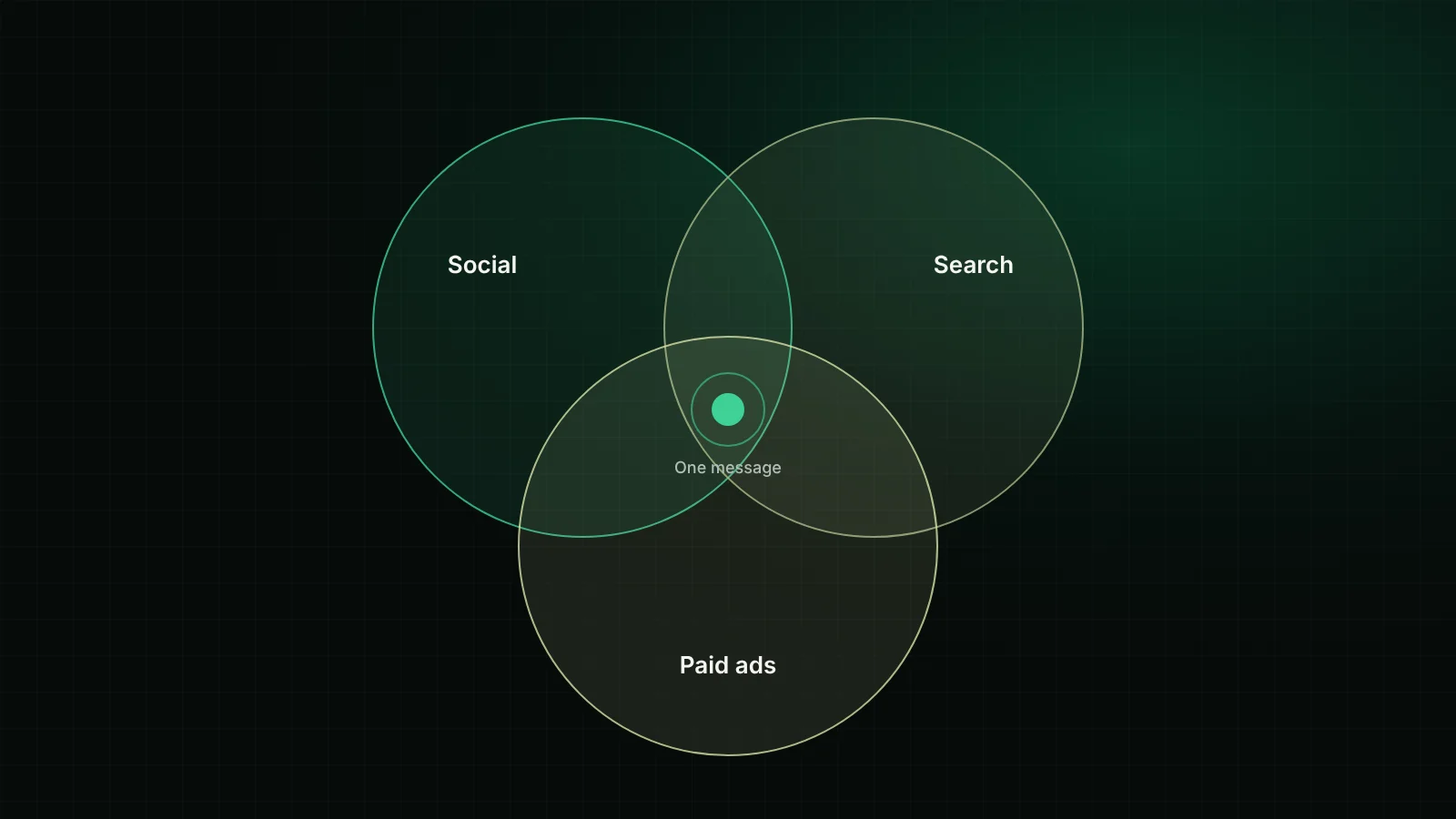
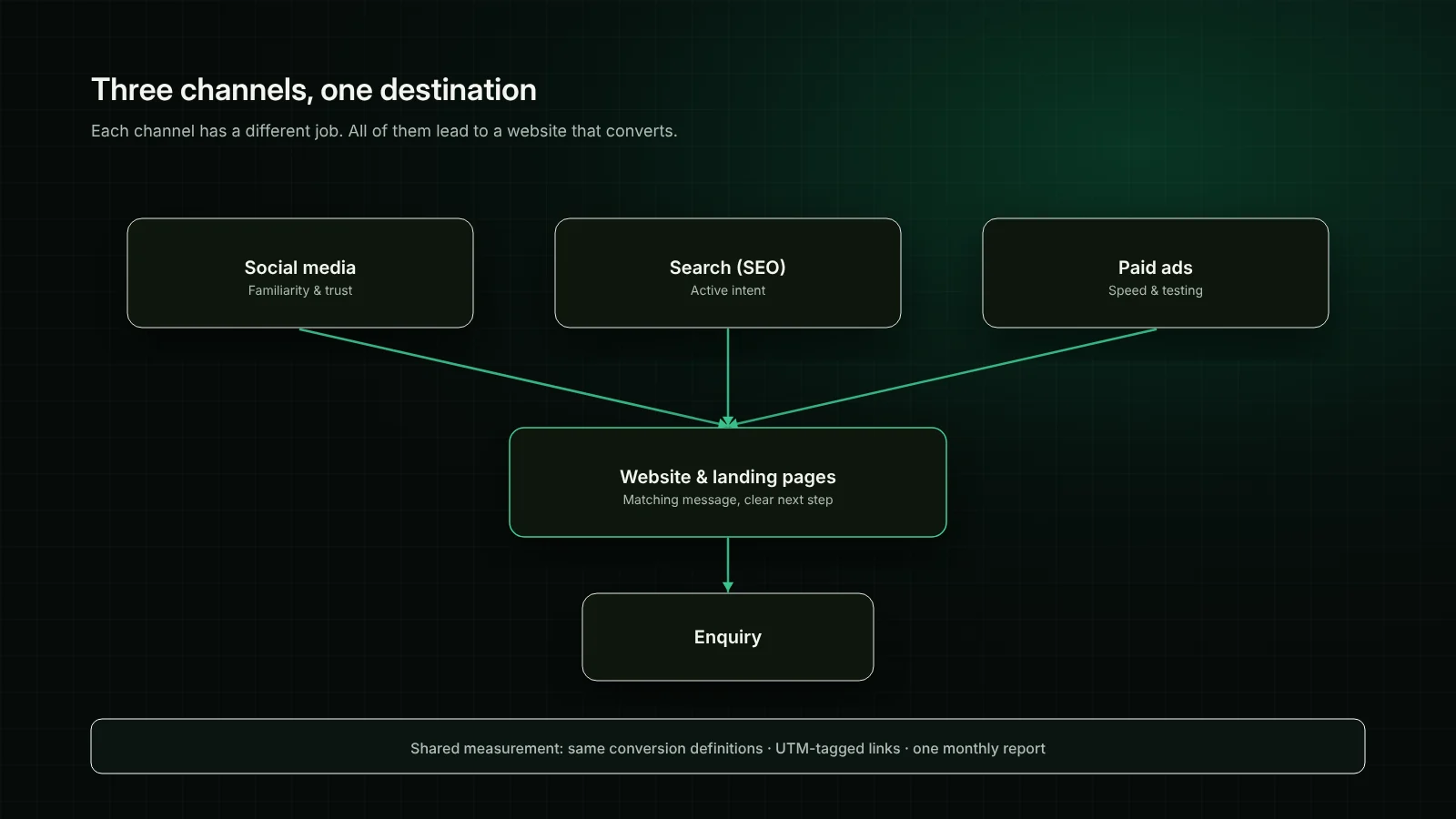
Social media, SEO and paid advertising work best together when each has a defined job: social media builds familiarity and trust over time, SEO captures people who are actively searching, and paid advertising adds controllable reach and speed. They are connected by one core message, shared audience insights, a website that converts, and consistent measurement.
Many small businesses treat these channels as separate projects run by different people. The result is mixed messages, duplicated effort and reports that cannot be compared. This guide explains how to plan them as one system.
Each channel reaches people at a different moment and in a different state of mind.
| Channel | When it reaches people | Main strength | Main limitation |
|---|---|---|---|
| Social media | While they are browsing, not necessarily looking to buy | Familiarity, personality, community | Organic reach can be limited and slow |
| SEO | When they search for a problem or service | High intent, long-lasting visibility | Takes time; no guaranteed rankings |
| Paid advertising | When you choose to appear, with targeting | Speed, control, testable | Stops when spending stops |
None of these is "best". They answer different needs. A new business may rely on paid ads for early enquiries while SEO builds. An established local business may get most enquiries from search and use social media to stay familiar.
Before choosing tactics, agree on the message every channel will reinforce. Answer these questions in a sentence each:
This becomes the basis for your website headlines, ad copy, social captions and search-focused content. When someone sees an ad, then later finds you through search and checks your Instagram, they should recognise the same business with the same promise.
The real advantage of combining channels is the information they share.
Search Console and keyword research show the questions people ask in their own words. Those questions make strong topics for blog articles, FAQs, social posts and ad headlines. Google's SEO Starter Guide recommends thinking about the words people use when searching for your content and using those naturally on your pages (Google Search Central).
Ads can test several messages in days rather than months. If one angle consistently attracts better enquiries, use it more prominently on your website and in organic content. Treat ad tests as research, not only as lead generation.
Comments, messages and saves show which topics your audience cares about. Popular questions from social media can become new FAQ entries or articles that support SEO.
Paid platforms can show ads to people who visited your website or engaged with your social content, subject to the platform's rules and your privacy and consent settings. These audiences already have some familiarity, so the message can focus on the next step rather than an introduction.
All three channels eventually send people to your website. If the destination is weak, every channel underperforms.
Each platform reports its own success, and the numbers rarely agree. To understand the whole picture:
Expect some ambiguity. A customer may see a social post, search your name a week later and then click an ad. Attribution models simplify this journey; use them as guides rather than absolute truth.
For a small team, a simple rhythm keeps the channels aligned:
Social media, SEO and paid advertising are most effective when they reinforce one message and share what they learn. Give each channel a clear job, make the website a strong destination and measure everything with the same definitions. The result is a marketing system that is easier to understand, easier to improve and less dependent on any single platform.
If you would like help planning this for your business, our team offers social media management, SEO and local visibility and paid advertising, as well as analytics and monthly reporting that brings them together.

How small and mid-sized businesses can use AI automation to capture, route and follow up enquiries and to support customers faster — while keeping people in control.
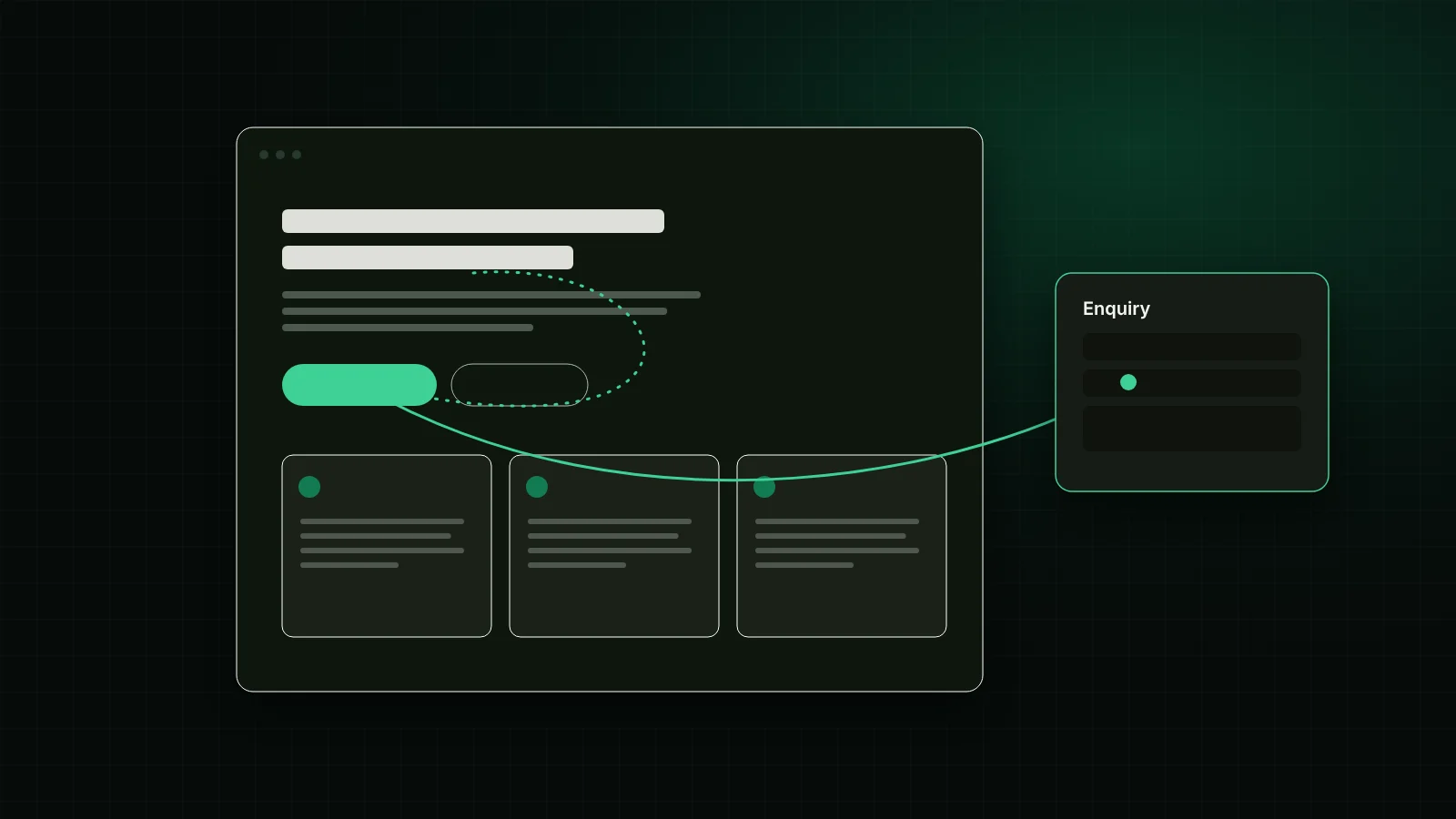
A practical checklist for small business websites — clear positioning, page structure, trust, speed, mobile usability and enquiry paths that make it easy to get in touch.